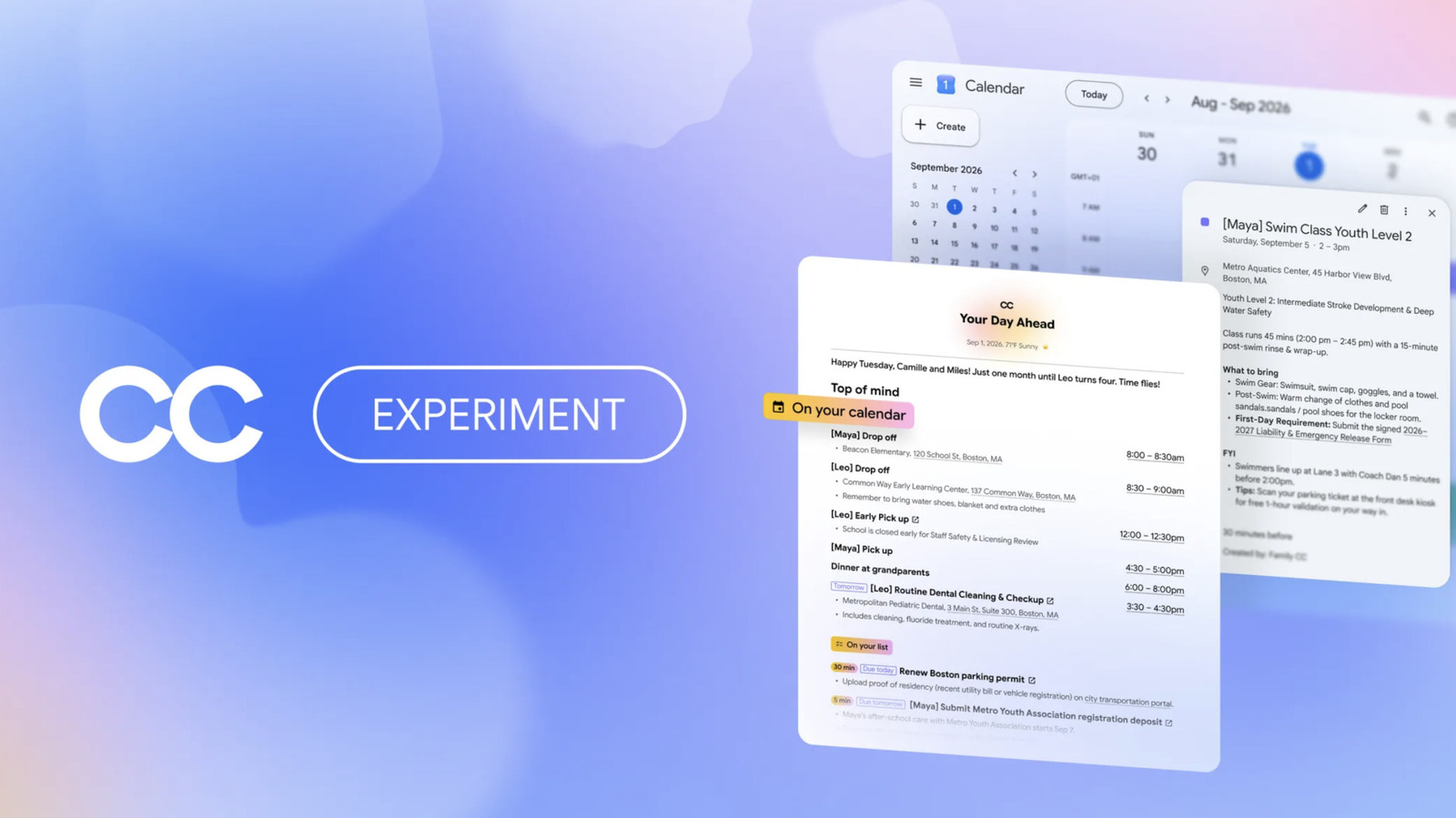
Google's revamped CC is an AI agent for families and groups
The Multi-Player Pivot
Most AI today is a lonely experience. Google is betting that the next massive growth lever is multi-user agentic workflows. By giving an agent its own identity, they are moving from a tool you use to a participant in your social circle.
The Household Lock-in
This is a classic ecosystem play. If an AI manages your family's collective schedule, switching to a different provider becomes a logistical nightmare for the whole house, not just you. It is a defensive moat built on shared context.
The Privacy Paradox
There is a huge tension here. To be useful, the agent needs to know what you are doing, but to be safe, it cannot tell your spouse everything. The winner in this space will be the one with the best permissioning architecture, not just the smartest model.
What to Watch
Watch how Google handles granular permissions for these briefings. If users cannot easily toggle what info stays private, the backlash will be swift. Also, keep an eye on how Apple responds within the HomeKit and Family sharing ecosystem.
Key Details
- Builders should stop thinking about single-user sessions and start designing for agents that hold their own credentials in group environments.
- Investors should look for shifts from individual subscriptions to household-based models as AI becomes a shared utility.
- The biggest hurdle isn't intelligence, it is the social friction of an AI knowing too much about one person and sharing it with another.