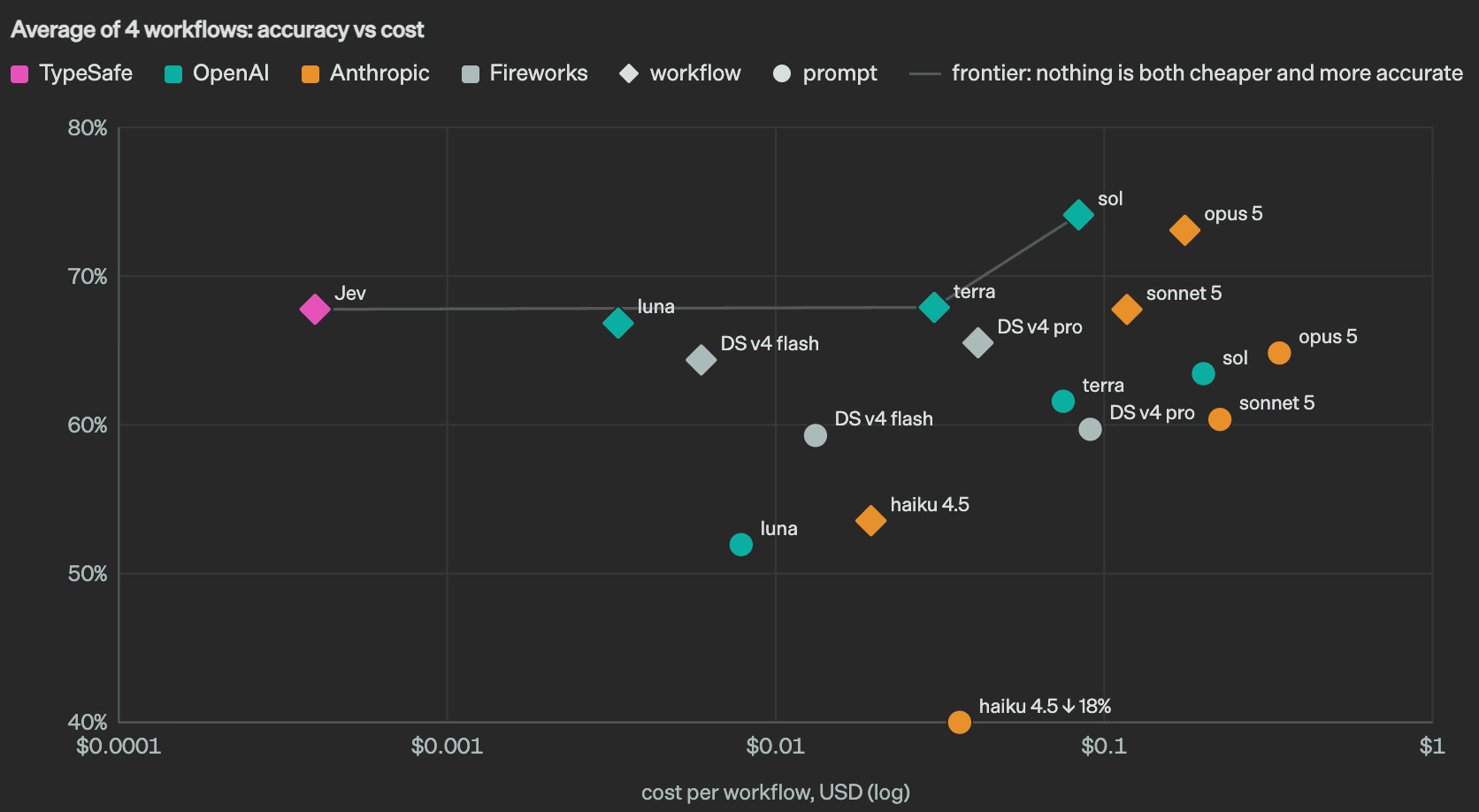
An ex-OpenAI researcher just exited stealth with $40M to build Jev, a model designed to live inside software instead of just acting as a chatbot. They are betting that the real future of AI is embedded intelligence that understands software logic, not just a text box you talk to.
🎯
Why It Matters
For builders, this is a massive signal to move past simple LLM wrappers and focus on deep, structural integration. For investors, it's a high-stakes test of whether specialized, software-native models can actually defend against the general-purpose giants.
📈
Market Impact
This could pivot the industry focus from consumer-facing chat interfaces to agentic infrastructure, forcing incumbents to rethink how they integrate reasoning directly into their core product logic.
🚀
Opportunities
→Build agentic workflows that use specialized models for software-native tasks instead of relying on generic API calls.
→Develop middleware that manages the integration friction between these new software-native models and existing legacy enterprise stacks.
→Identify niche software verticals, like CAD or specialized fintech tools, where a model built for software logic beats a generalist model every time.
⚠️
Risks & Challenges
→The feature vs product trap: If OpenAI or Anthropic releases a similar software-native capability via their APIs, TypeSafe's moat could evaporate.
→Integration fatigue: Forcing new models into existing software ecosystems creates massive friction for developers already overwhelmed by tool sprawl.
Deep Intelligence Analysis
The OpenAI Pedigree
This isn't just another seed round. Having a founding researcher from the ChatGPT era means they are likely targeting the specific architectural flaws that prevent current LLMs from actually executing complex tasks within software environments.
Chatbots are the distraction
The hype cycle is moving from 'can it talk' to 'can it do.' TypeSafe is betting that the real value isn't in better conversation, but in models that understand software state and logic inherently.
The Distribution Problem
Even with a superior model, winning requires getting inside the workflows of major software players. Without a massive distribution play, they risk being a brilliant technology that nobody actually installs.
What to Watch
Keep a close eye on their first major enterprise integration partner. If they land a Tier 1 SaaS player in the next 12 months, the software-native AI thesis is officially validated.
Key Details
Stop building simple wrappers and start thinking about how models interact with code and UI at a structural level.
Investors should look for teams solving the bridge between raw model power and actual software execution.
If big labs make it easy to reason through software steps, specialized models need a much deeper moat than just performance.